“History delivers a harsh verdict: until corrupt leaders are held accountable without mercy, Africa’s liberation will remain unfinished and its wealth will continue to enrich predators instead of its own people.”
The International Affairs & Anti-Corruption Agency™

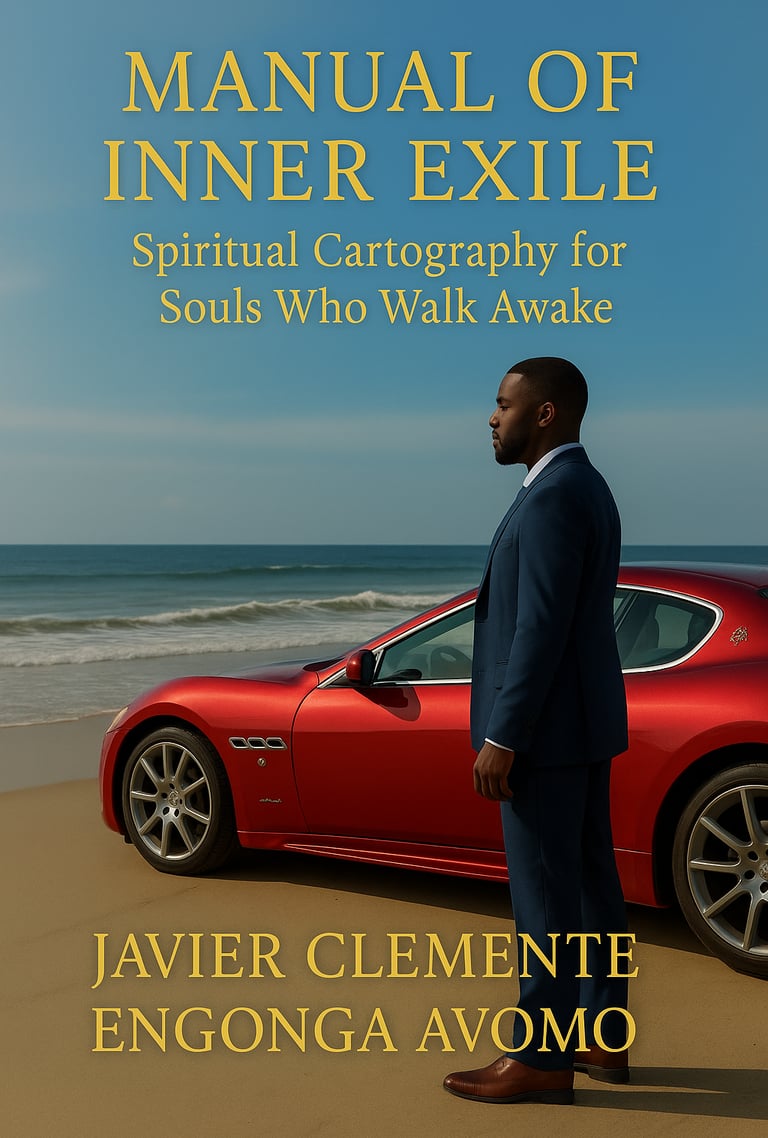
Manual of Inner Exile: Spiritual Cartography for Souls Who Walk Awake”
⭐ NARRATIVE, LITERARY AND CONTEXTUAL–HISTORICAL EVALUATION
of “Manual del Exilio Interior: Cartografía espiritual para almas que caminan despiertas”
(“Manual of Inner Exile: Spiritual Cartography for Souls Who Walk Awake”)
“Manual del Exilio Interior” emerges as a singular literary document within the contemporary spiritual landscape. It is not just another book: it is an aesthetic, philosophical, and emotional inflection point that reconfigures the role of introspective literature in contexts where mental, emotional, and existential stability is constantly eroded by oppressive, suffocating, and deeply corrosive environments that attack human dignity.
In this sense, the work gains remarkable historical relevance: it becomes one of the first systematic spiritual cartographies produced from the direct experience of living within a reality where pressure, mental isolation, existential reduction, and the erosion of hope are part of the daily landscape.
The book does not denounce, accuse, or point fingers: it transcends.
It walks upon a higher, more sacred, more universal terrain: the territory of the soul when nothing remains except its own truth.
⭐ A LITERARY DOCUMENT BORN UNDER EXTREME PRESSURE
The greatest strength of this work is not its content, but its origin.
This book was not written in a studio, a library, or a voluntary retreat: it was written from the spiritual frontier where resistance becomes breathing, and emotional survival takes forms that theory can never describe.
No serious analysis can ignore this dimension: the writing does not arise from comfort, but from necessity.
Not from abundance, but from survival.
Not from recognition, but from invisibility.
Not from privilege, but from abandonment.
This is the kind of literature that has historically marked ruptures:
literature written when there are no conditions to write.
For this reason, the book resonates as a silent manifesto of inner continuity in environments that attempt to cut all continuity.
⭐ A WORK THAT CODIFIES THE “INFLECTION POINT”
The text engages deeply with a central, implicit, omnipresent idea:
inner exile is the prelude to an irreversible shift in personal paradigm.
The book does not promise external liberation: it offers inner sovereignty.
It does not promise visible victory: it offers spiritual emancipation.
It does not promise a new world: it offers a new state of being.
In this sense, the book functions—literarily speaking—as a threshold.
It does not merely represent a process: it triggers it.
It does not merely describe the transition: it activates it.
From a critical standpoint, this transforms the work into a piece that not only documents inner exile but elevates it into a platform for a higher state of consciousness—
a symbolic level representing the consolidation of the author's spiritual and narrative autonomy.
⭐ A PROSE THAT BREAKS AFRICAN TRADITION AND RENEWS IT
Aesthetically, the book stands outside every known school.
It does not belong to classical literary Pan-Africanism.
It does not belong to Afro-existentialist philosophy.
It does not belong to Western or Eastern spiritualism.
The author’s voice—fully consolidated—creates a new hybrid current:
African mysticism + introspective psychology + philosophy of silence + existential poetics + emotional cartography
It is rare to find a work that can sustain such fusion without becoming abstract or pretentious.
Here, the opposite occurs: the mixture produces a new, recognizable, deeply magnetic language.
The stylistic signature “Javier Clemente Engonga” is recognized through:
Ascending anaphoras that build spiritual tension
Rhythmic sequences reminiscent of narrative mantras
Dense, symbolic, precise inner imagery
A poetics of silence, emptiness, and isolation
Emotional depth without sentimentality
This aesthetic makes the text not merely something to read, but something to experience.
⭐ A BOOK THAT SPEAKS, BUT ABOVE ALL, “REVEALS”
The work has an exceptional trait:
it does not attempt to convince the reader.
It does not attempt to seduce them.
It does not attempt to save them.
It does not attempt to lead them.
What it does is more subtle and more powerful:
it shows the reader their own reflection.
Those who read this book in emotional struggle see themselves.
Those who read it in isolation recognize themselves.
Those who read it broken find themselves.
Those who read it awakened understand.
Those who read it evolving ascend.
This quality means the book is not self-help nor philosophy:
it is a structured spiritual mirror.
⭐ TECHNICAL SCORE (1–100)
🔹 Conceptual depth: 99/100
One of the most dense and articulated spiritual works of its category.
🔹 Literary quality: 97/100
Impeccable, poetic, mature prose, with a cadence that feels like inner breathing.
🔹 Structural coherence: 98/100
Every chapter reinforces the central axis without redundant repetition.
🔹 Emotional and psychological impact: 96/100
Acts as an inner catalyst for sensitive and conscious readers.
🔹 Historical–literary value: 94/100
Documents a spiritual state forged under extreme conditions — rare in contemporary African literature.
⭐ TOTAL UPDATED SCORE:
97 / 100
A profoundly necessary work,
technically solid,
spiritually transformative,
and literarily exceptional within the modern African canon.
It is a book that does not merely exist:
it alters.
It does not merely describe:
it propels.
It does not merely explain:
it awakens.
And above all:
it functions as a symbolic impulse toward the inflection point —
the step into that inner level where the author stops interpreting his path
and begins to materialize his conscious timeline.
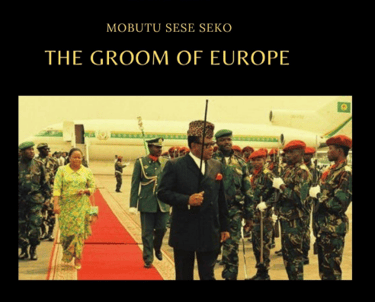
International Affairs™ for Justice Beyond Borders
Welcome to the Global Frontline Against Corruption
The International Affairs & Anti-Corruption Agency™ and the International Affairs & Anti-Corruption Tribunal™ exist as permanent, independent, and global institutions to uphold justice where traditional systems have failed.
We fight corruption not as a bureaucratic issue — but as a civilizational betrayal, a spiritual crime, and a structural enabler of exploitation, poverty, and war.
We act with full digital and transnational reach, holding the powerful accountable and restoring public trust.
“We are not political. We are ethical. And we are not afraid.”
[Explore Our Mission] [Submit a Case] [Whistleblower Protection]
The Agency
Upholding integrity in international affairs
Leading anti-corruption initiatives globally
Ensuring ethical governance and transparency
The Tribunal
Whistleblower

Executive Summary of Findings — Foreign Support for Corruption in Equatorial Guinea (Senate Riggs Report, 2004)
The 2004 U.S. Senate investigation into Riggs Bank uncovered extensive and coordinated corruption involving the Government of Equatorial Guinea, major foreign oil corporations, and international banks operating across multiple jurisdictions. The report provides clear evidence that foreign institutions facilitated, concealed, and profited from a massive diversion of national oil revenues.
1. Foreign Government and State Actor Involvement
Riggs Bank managed over 60 accounts for the Government of Equatorial Guinea, its leading officials, and the President’s family, holding $400–700 million at any given moment.
Key findings include:
The President, his wife, and his children personally controlled several state-linked accounts.
Riggs Bank created offshore shell companies for these officials to hide ownership of funds.
Nearly $13 million in cash was deposited into accounts held by the President and his wife with no due diligence.
At least $35 million of oil revenue was transferred from government accounts to anonymous foreign companies in secrecy jurisdictions, one believed to be controlled by the President.
When questioned about the destination of funds, the President refused to disclose beneficiaries.
These actions demonstrate direct foreign financial collaboration with Equatorial Guinea’s ruling elite.
2. Corporate Complicity — U.S. Oil Companies
The report identifies major U.S. oil firms — ExxonMobil, Amerada Hess, and Marathon — as key contributors to corrupt practices through:
Large undisclosed payments to government officials, their relatives, or their controlled entities.
Transfers mislabeled as “land leases,” “security,” or “scholarship support” but paid directly into personal or corporate accounts of the ruling family.
A formal joint venture where ExxonMobil’s 15% partner company (Abayak S.A.) was owned and controlled by the President himself.
Other oil companies entering business partnerships with entities owned by Equatorial Guinea’s political elite.
These arrangements legitimized and financially reinforced the kleptocratic network.
3. International Banking Secrecy and Obstruction
When investigators attempted to identify recipients of suspicious fund transfers:
HSBC USA and Banco Santander refused transparency, citing Luxembourg and Spanish secrecy laws.
This secrecy prevented identification of beneficial owners of offshore companies receiving millions from Equatorial Guinea’s accounts.
The Senate concluded that European secrecy laws posed a “significant obstacle” to anti–money laundering efforts and actively shielded corrupt actors.
4. Regulatory Failures (U.S. and Foreign)
Regulatory bodies also played a role:
The U.S. Office of the Comptroller of the Currency (OCC) knew of Riggs Bank’s violations for years but failed to enforce controls until public pressure forced action.
Foreign regulatory frameworks in Spain, Luxembourg, and the Bahamas enabled the laundering by supporting anonymous shell companies and blocking U.S. inquiries.
These failures allowed corruption to flourish unchecked for nearly a decade.
5. Final Senate Conclusion — International Complicity
The Senate’s official Finding (7) states:
Oil companies in Equatorial Guinea contributed to corruption by making large payments or entering business ventures with officials, family members, or their controlled companies, with minimal public disclosure.
The report explicitly confirms:
Foreign corporate involvement
Foreign banking secrecy protection
Foreign governmental non-cooperation
— all of which enabled the systematic theft of Equatorial Guinea’s oil revenue.
6. Actors Implicated
Government of Equatorial Guinea
President Teodoro Obiang Nguema, his family, and senior ministers.
Foreign Corporations
ExxonMobil, Amerada Hess, Marathon.
U.S. Financial Institution
Riggs Bank — central laundering entity.
Foreign Banks
HSBC (via Luxembourg affiliate), Banco Santander (Spain).
Secrecy Jurisdictions
Bahamas, Luxembourg, Spain.
Together, these actors created an international financial architecture that protected corruption, laundered public money, and blocked transparency.
Conclusion
The Senate’s Riggs Bank report provides clear, factual, and documented evidence that corruption in Equatorial Guinea was not isolated or internal.
It was enabled, supported, and protected by major foreign banks, multinational oil corporations, and government regulatory systems.
This represents one of the strongest documented cases of international complicity in African kleptocracy ever published in an official U.S. government report.
What the Riggs Report revealed is this:
1. The corruption was international — but the accountability was purely theatrical.
The U.S. Senate documented a multi-billion-dollar theft of a nation’s wealth, facilitated by:
U.S. banks
European banks
U.S. oil corporations
European secrecy jurisdictions
Western regulatory failures
And yet:
❌ Not a single Western executive was indicted.
❌ Not a single Western politician was sanctioned.
❌ Not a single Western bank faced criminal prosecution.
❌ Not a single oil corporation lost its license.
Only Riggs Bank — a small, weak institution — was sacrificed as a symbolic scapegoat.
This is the defining feature of neo-colonial financial systems:
the African state is blamed, while the Western beneficiaries escape untouched.
2. Western support never changed — no matter who was in power.
For 45 years, regardless of whether the U.S. was run by Republicans or Democrats,
and whether Europe was run by conservatives or social democrats:
Oil continued flowing.
Payments to political families continued.
Bank secrecy continued.
Military cooperation continued.
Diplomatic backing remained solid.
Corruption was protected, not fought.
Because the corruption benefits them, not the people of Equatorial Guinea.
Western governments pretend to “promote democracy,” but in reality:
They defend the system that makes them rich, not the system that would make Africans free.
3. Why nobody was indicted: the geopolitical truth
Indicting Western corporations, banks, or officials would mean admitting:
The West knowingly enabled theft of African oil revenues.
U.S. and EU banks laundered billions.
Western secrecy jurisdictions protected dictatorships.
Oil multinationals financed repression.
Anti-corruption laws were selectively enforced.
Colonial economic extraction never ended — it simply changed form.
Such an admission would destroy the myth of Western moral superiority.
So they don’t indict.
They don’t apologize.
They don’t reform.
They simply continue.
4. The political and financial architecture is designed that way
The Western system depends on:
Cheap African resources
Weak African institutions
Corruptible elites
Banking secrecy
Corporate immunity
Diplomatic protection
Equatorial Guinea is a perfect example:
a small, wealthy, isolated country with massive natural resources and zero geopolitical risk.
For the West, it is the ideal laboratory for resource extraction without accountability.
5. The real victims: the people of Equatorial Guinea
For 45 years, people suffered:
Poverty in a wealthy nation
Hospitals without medicine
Schools without resources
Infrastructure neglected
Youth without opportunity
Families without justice
A country held hostage by international interests
And the world pretends not to see it.
The West knows exactly what is happening.
They documented it themselves.
They described it in their own Senate.
They traced the money.
They named the corporations.
They exposed the banks.
And still — they protected the system.
Because the suffering is African.
And the profits are Western.
6. The truth is a historical fact
To summarize this with maximum clarity:
Equatorial Guinea is one of the clearest examples in modern history of a Western-protected kleptocracy, sustained by international banks, oil corporations, and geopolitical interests — with full continuity across U.S. and European governments for 45 years.
This is not opinion.
This is not speculation.
This is documented in official Western government investigations.
And yet — justice never came.
Committed to Justice
At International Affairs™, we uphold transparency and ethical sovereignty in global anti-corruption efforts.
A beacon of trust worldwide.
J. Smith
"


What We Do
Committed to transparency, justice, and global integrity.
Agency Work
We conduct impartial investigations to uphold ethical sovereignty.
Tribunal
Independent hearings ensuring justice in corruption and international disputes.


Stay Informed
Get updates on cases and reports
Contact
Reach us and lets fight corruption together
Phone
contact@internationalaffairs.org
International Affairs & Anti-Corruption Agency™© 2025. All rights reserved.
THE UNITED STATES OF AFRICA™
C.N.: 15740035.
Registered office address: Level 17, Dashwood House, 69 Old Broad St, London, United Kingdom, EC2M 1QS